
Documented AWC company work
An older ceiling needed more than a surface patch.
A documented AWC ceiling restoration showing protection, removal, reinforcement, base work, texture and the finished room.
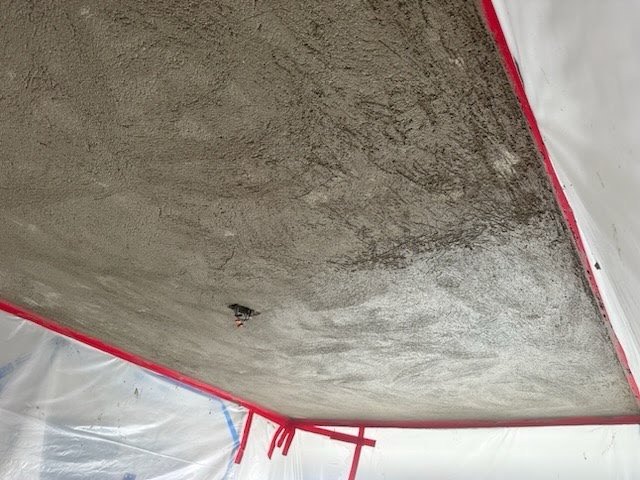
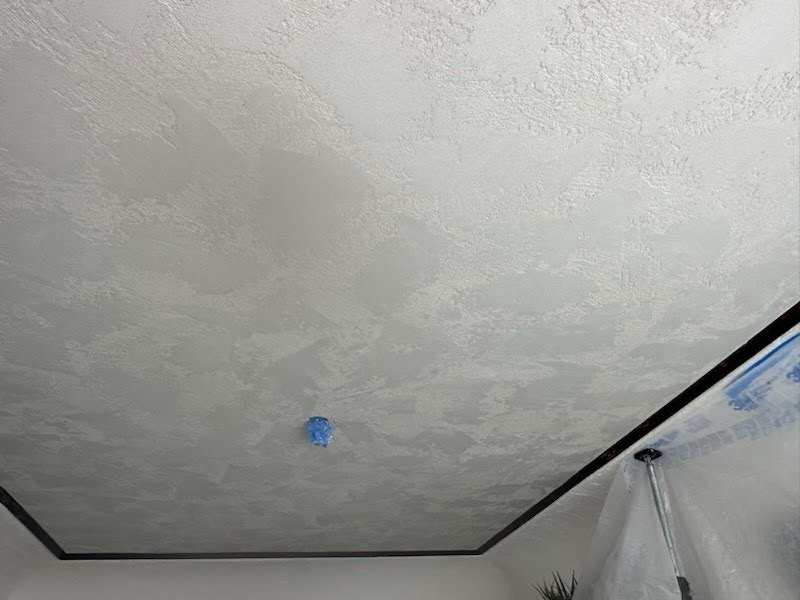
This AWC project began with a visibly failed older ceiling finish. The work record called for isolating the room, removing unstable material until the remaining assembly was sound, rebuilding the ceiling surface, matching its character and returning the room to use. Five retained field photos show the ceiling after removal, during reinforcement and base work, after texture, and with the room put back together.
The visible sag was only the starting condition
The written scope described significant ceiling sagging where the older finish had separated from its backing. It called for removing loose material until the remaining assembly was sound. That is a different decision from covering a crack or skimming over movement.
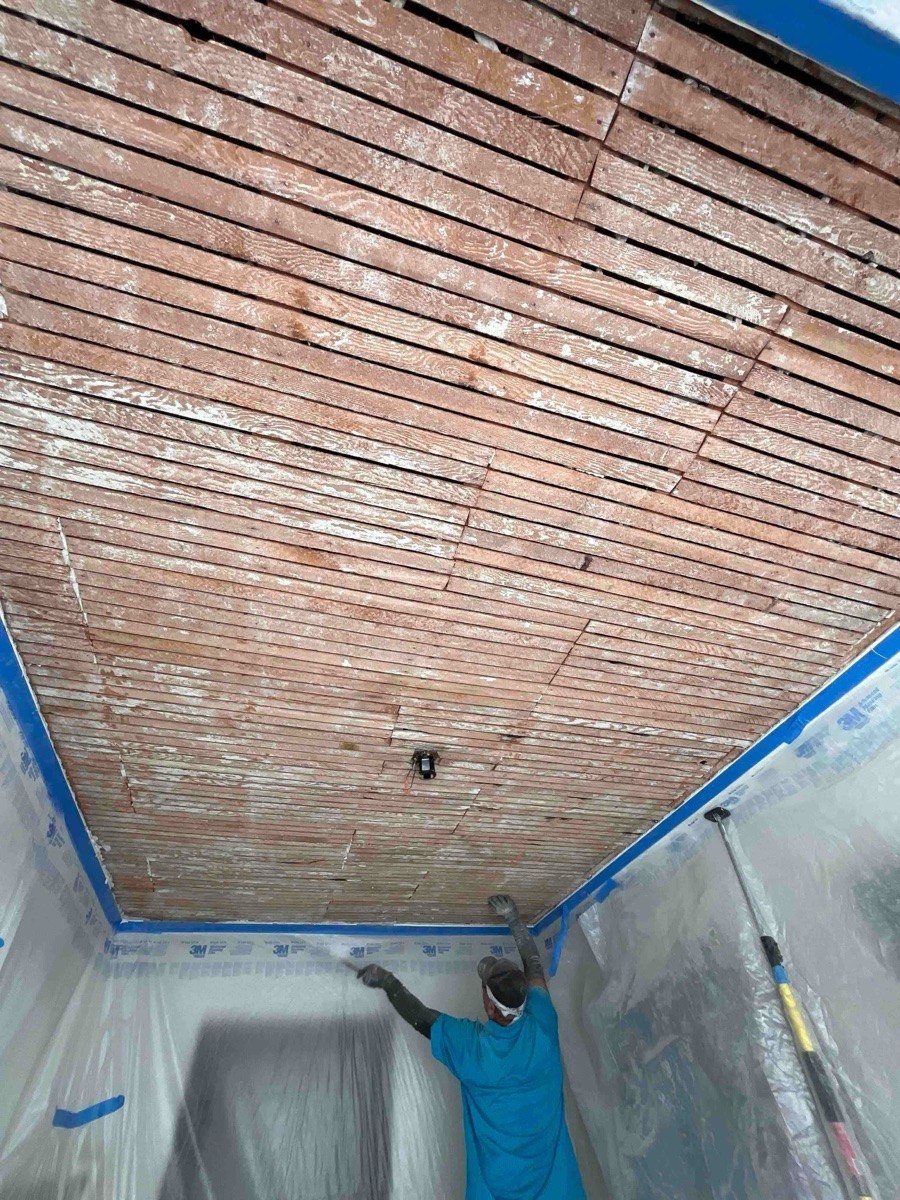
The exposed-stage photo matters because it shows why older ceilings need an investigation step. Once the loose finish is removed, the contractor can see the retained backing, the perimeter details and the opening for the room fixture. A proposal should explain what happens if the revealed conditions differ from the assumed repair method.
Protection stayed part of the repair
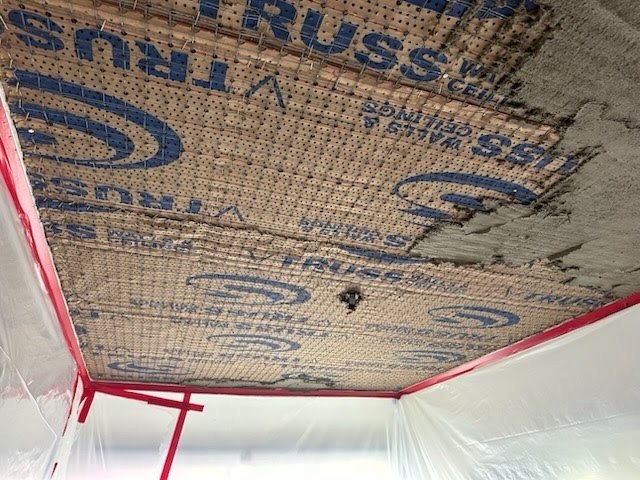
The source scope included plastic protection around the room, floor protection and moving or covering contents. The field photos show wall protection remaining through the exposed, reinforcement, base and texture stages.
That containment does not make a dust-free promise. It shows a practical sequence for separating the work area while removal and wet finish operations are underway. Occupancy, access and cleanup expectations should be decided before the ceiling is opened.
The field sequence is stronger evidence than a single after photo
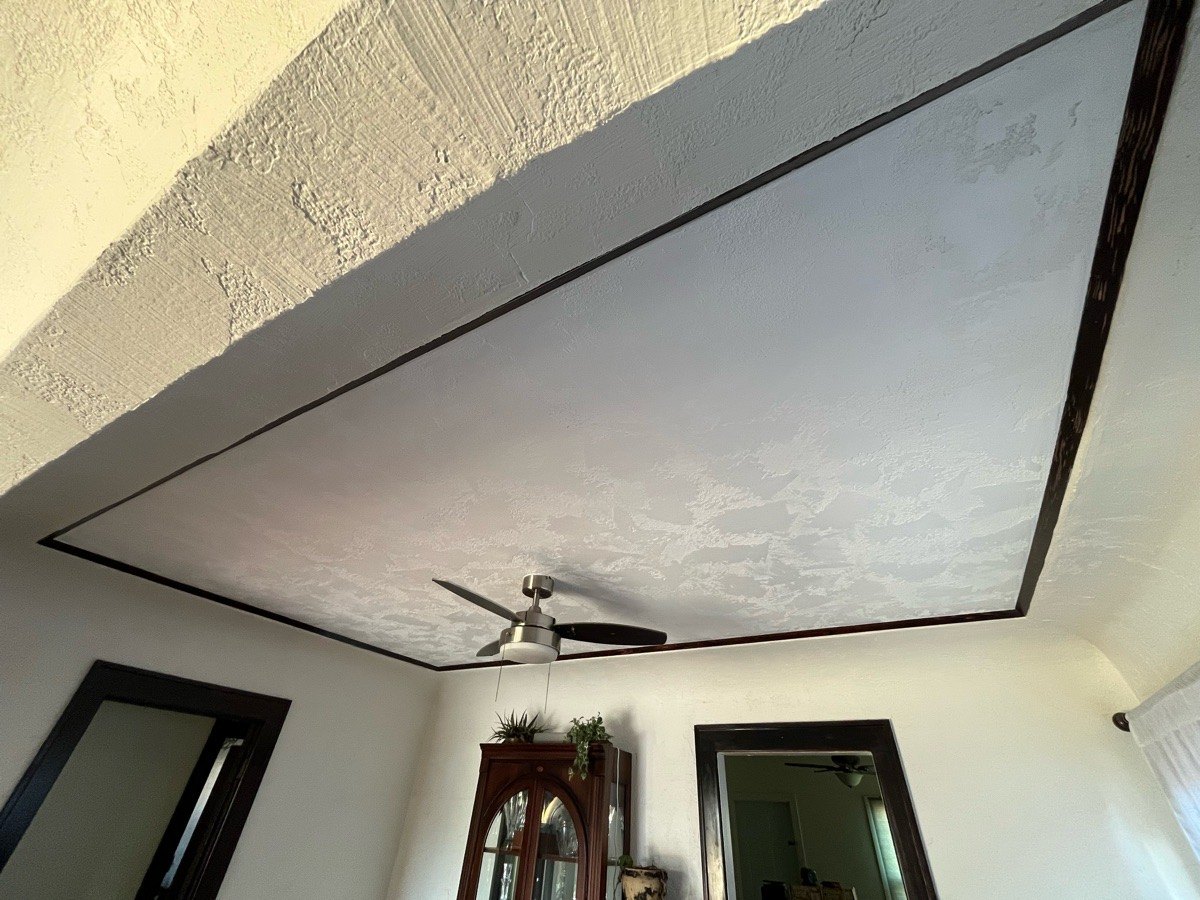
The five photos document the same AWC project. Together they show an older lath ceiling after removal, an added reinforcement layer, a continuous base stage, a white textured finish and the room with its ceiling fan returned.
The images document visible stages only. They do not prove concealed fastening, material specifications, inspection results or performance over time. Those details require the project record and property-specific verification.
Older plaster can change a drywall conversation
A request may arrive as a drywall repair even when the existing ceiling is an older plaster assembly. Here, the exposed-stage photo shows an older lath substrate; later photos document reinforcement and rebuilt finish layers. The right scope follows the conditions found, not the shorthand used in the first call.
Before approving similar work, ask what is loose, what can remain, how edges and decorative details will be handled, and where the new finish will stop. A small-looking symptom can become a room-scale restoration once unstable material is traced to sound boundaries.
Define the finished-room handoff
The finished photo shows the full room view instead of a tight patch close-up. That makes the perimeter trim, ceiling texture, fixture reset and normal viewing distance part of the closeout discussion.
For an occupied home or managed building, the written scope should identify protection, repair boundaries, texture expectations, paint limits, fixture responsibility, cleanup and any follow-up item. AWC can price that work after the existing ceiling and access conditions are reviewed.